3 spots that keep your heel pain coming back, and none of them are where it hurts
That's why rolling, stretching and new insoles only ever help for a day. Here's where they hide, and how to release each one.


For two years, every morning started the same way. Sitting on the edge of the bed, flexing my foot, trying to talk it into the first step.
Then I'd stand up. Like stepping on a nail.
I'd hold the wall all the way to the bathroom. And every time I sat down after that, at work, in the car, getting back up meant the first step all over again.
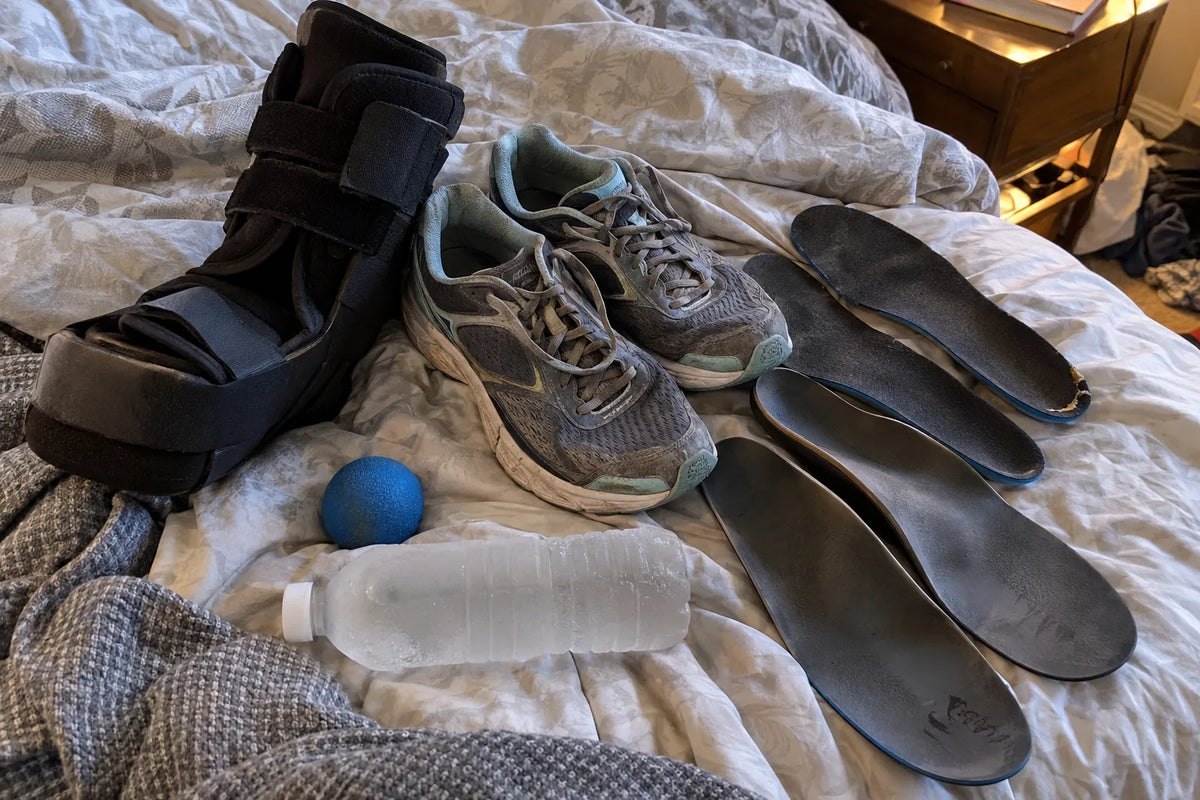
So I did every single thing they tell you to do. Stretched. Iced. Rolled it on a frozen water bottle. New running shoes, then better ones. Insoles. Custom orthotics. A night splint I couldn't sleep in. A podiatrist who gave me ten minutes and told me to give it time.
Then one morning, it didn't hurt.
I stood there, waiting for it. Nothing. I walked to the kitchen without touching the wall and told my husband, “I think it's finally going.”
Two mornings later, I was holding the wall again.
That night I lay awake thinking about my mom. She had bad feet too. I watched her stop going places, one by one. Was that me now?
I was doing all of it. So what was I doing wrong?
If that's your morning too, you didn't do anything wrong. Every single fix they gave you went after your foot, right where it hurts. Nobody ever thought to check anywhere else.
So I went looking myself
One night it was so bad I couldn't sleep. Even the weight of the covers on my heel hurt.
I kept going back to the one thing that never made sense. Every fix helped a little. The frozen bottle, the stretches, the new shoes. Each one felt better for a day.
Then I'd wake up holding the wall again.
If something helps, it should add up. Mine never did.
It was like something was dragging my heel tight again every night and undoing everything I'd done.
So I got up and went looking for people like me. The ones it kept coming back for.

They all said the same thing. The experts only ever looked at their feet.
And the ones who finally got better had all found something those experts missed. Something stuck higher up the leg, yanking on their foot the whole time.
It's probably happening in your leg right now.
The band under your foot, the one that hurts, is called the plantar fascia. And it doesn't stop at your heel. It's one strand of a web that wraps your whole leg, from your toes up to your hip.
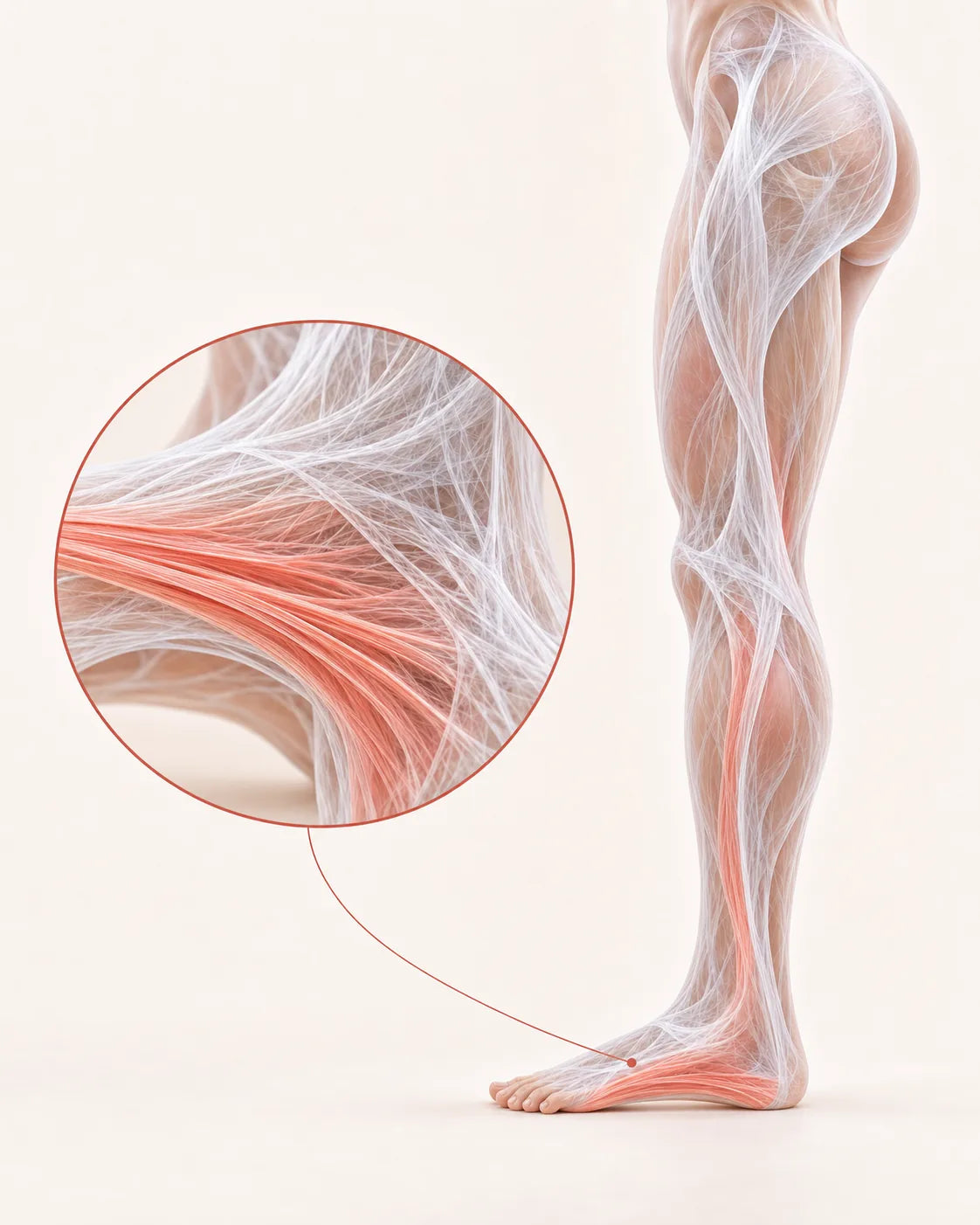
That web is meant to glide every time you move. But in places, it gets stuck. It glues down, clamps on, and drags everything around it tight. That stuck spot is called an adhesion.
And an adhesion doesn't hurt where it sits. It hides somewhere up your leg, tugging on the band under your foot, and lets your heel take the blame.

It's why your first step is the worst one. All night, while you lie still, it keeps cranking that band tighter. By morning it's wound as tight as it gets. Then you stand up and put your whole weight on it.
It's why nothing you've tried has lasted. Every fix loosens the band under your foot for a day. Every night, the adhesion yanks it tight again.
And it's why your X-rays keep coming back clean. An X-ray shows bone. It can't see your fascia. It can't see an adhesion. So you get told nothing's wrong, while it keeps wrenching on your heel every single day.

All this time, everyone's been treating your heel like it's the problem. Your heel is just the thing being pulled.
And an adhesion won't let go on its own. You have to find it and release it. You could roll your heel for another ten years and never get close.
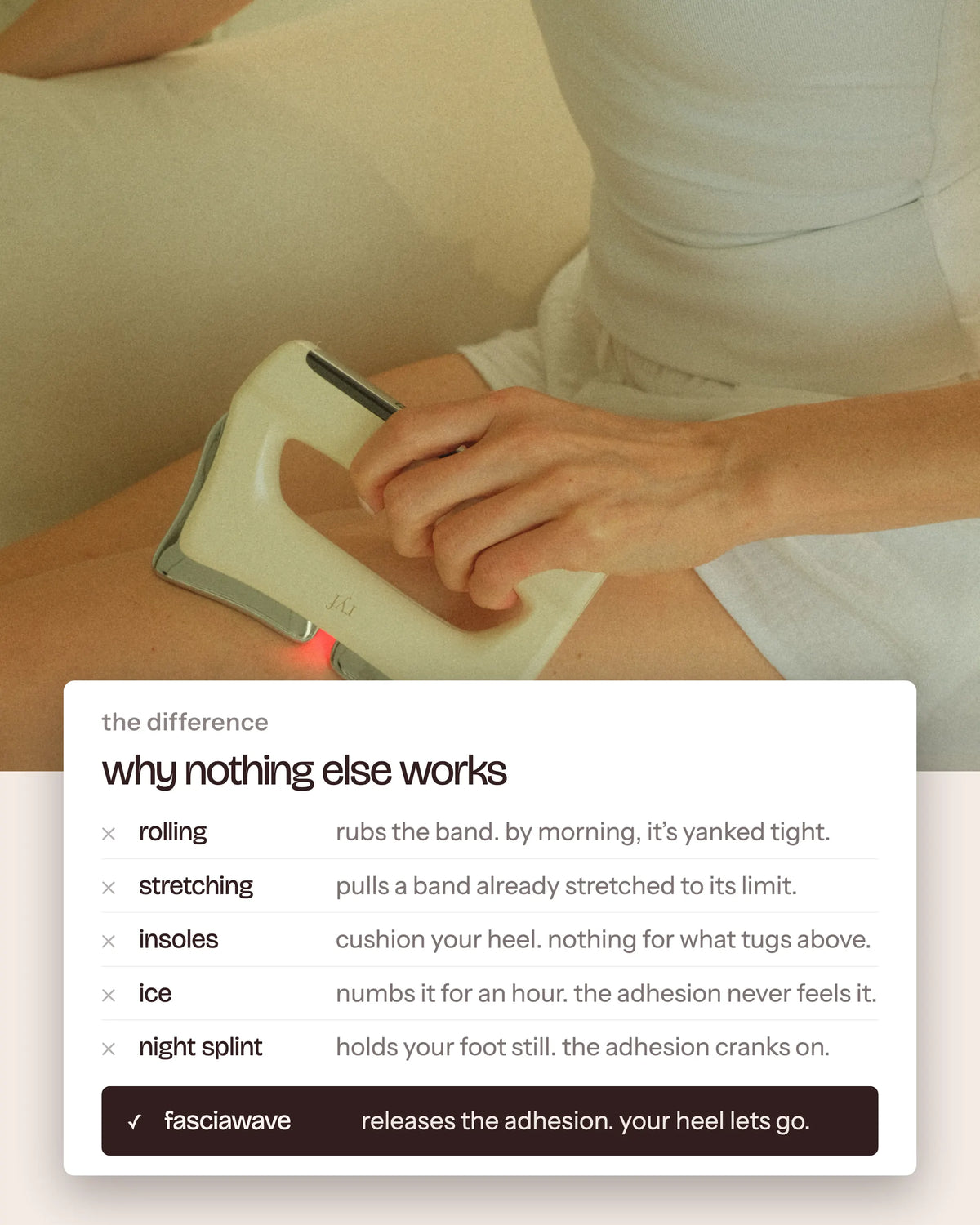
Why everything you've tried keeps letting you down
Every one of them works on your heel. The adhesion is somewhere else, still hanging on.
-
Rolling
Rubs the band that's being yanked. By morning, the adhesion has dragged it tight again.
-
Stretching
Pulls on a band that's already stretched to its limit. Some days it makes the pain worse.
-
Insoles and new shoes
Cushion your heel from the floor. Do nothing about what's tugging from above.
-
Ice and the frozen bottle
Numbs the pain for an hour. The adhesion never feels a thing.
-
The night splint
Holds your foot still all night. The adhesion just keeps cranking against it.


By the time the sun came up, I knew what I was hunting for.
There are three places it usually hides. None of them are where it hurts.
The 3 spots nobody checks
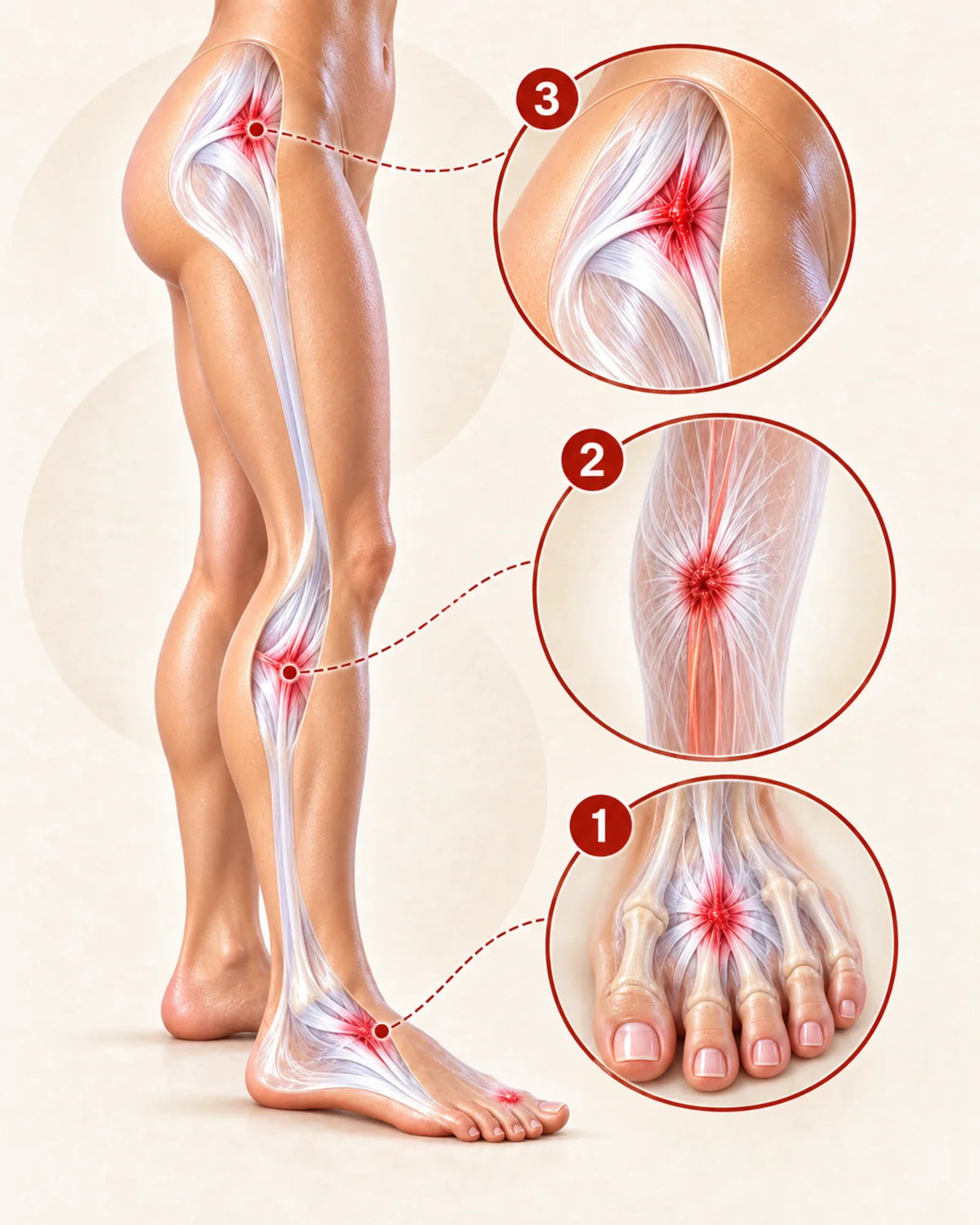
I'm going to show you exactly where all three are. The first one will surprise you. The third, you'd never connect to your heel in a million years.
But finding them is only half of it.
How to release an adhesion
Once you've found one, this is how you get it to let go. It's the same three steps for every spot.
- Warm it
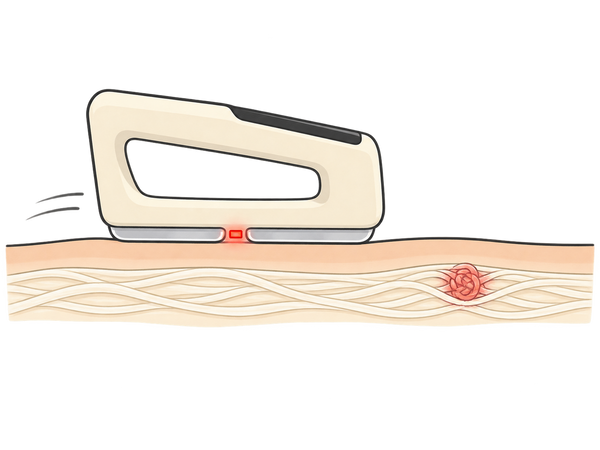
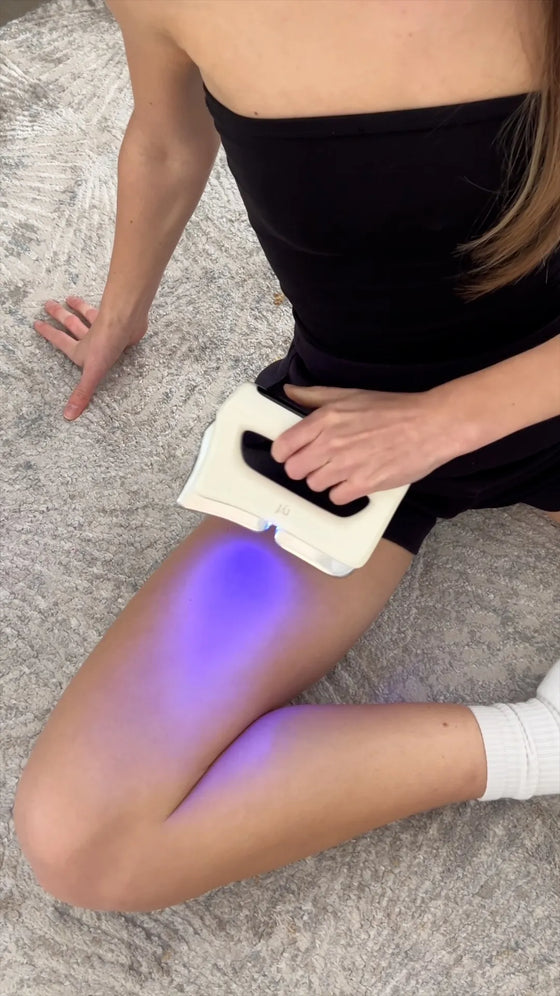
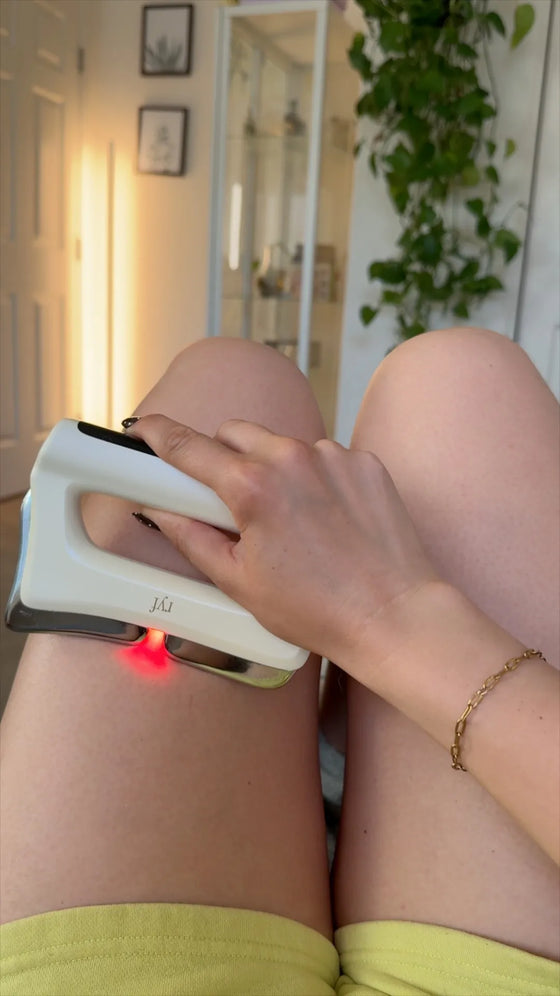
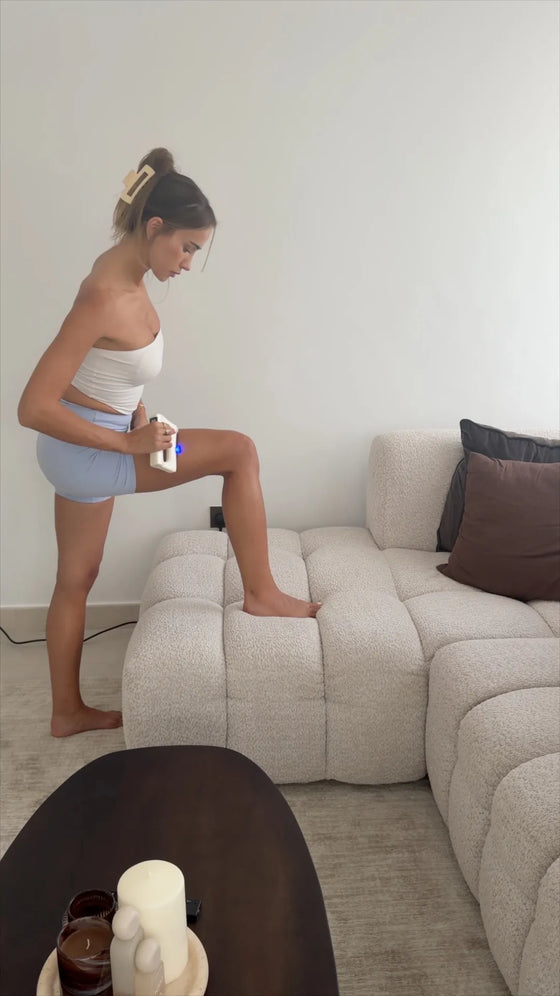
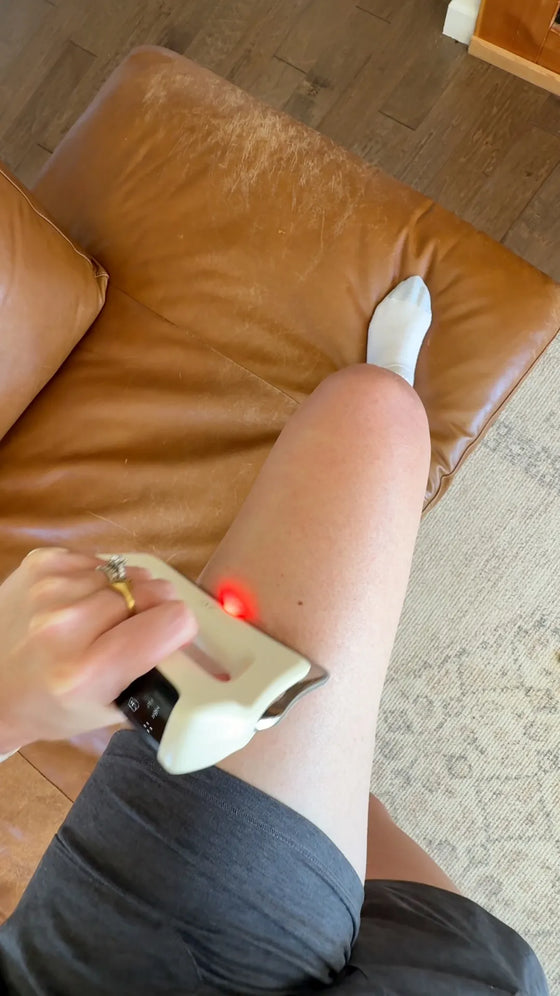
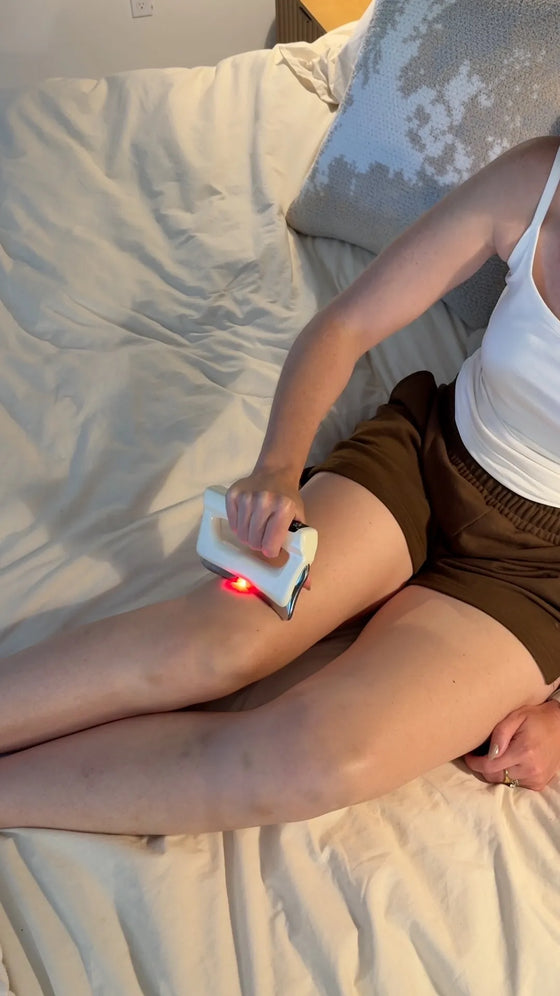
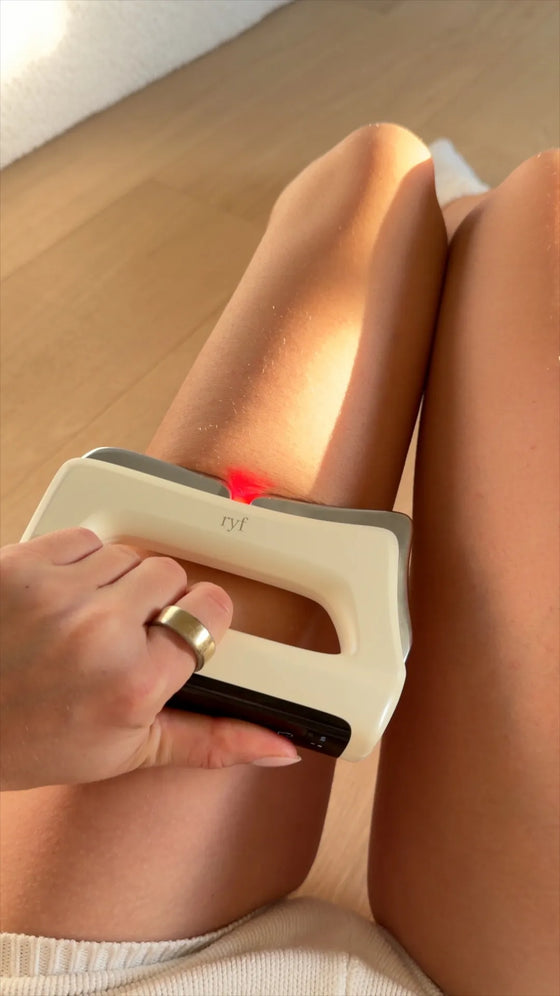
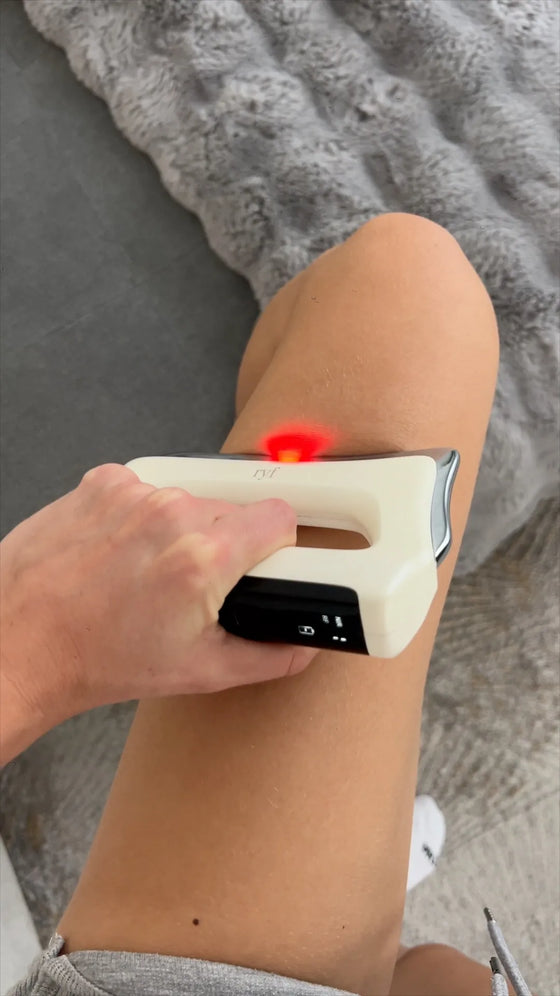
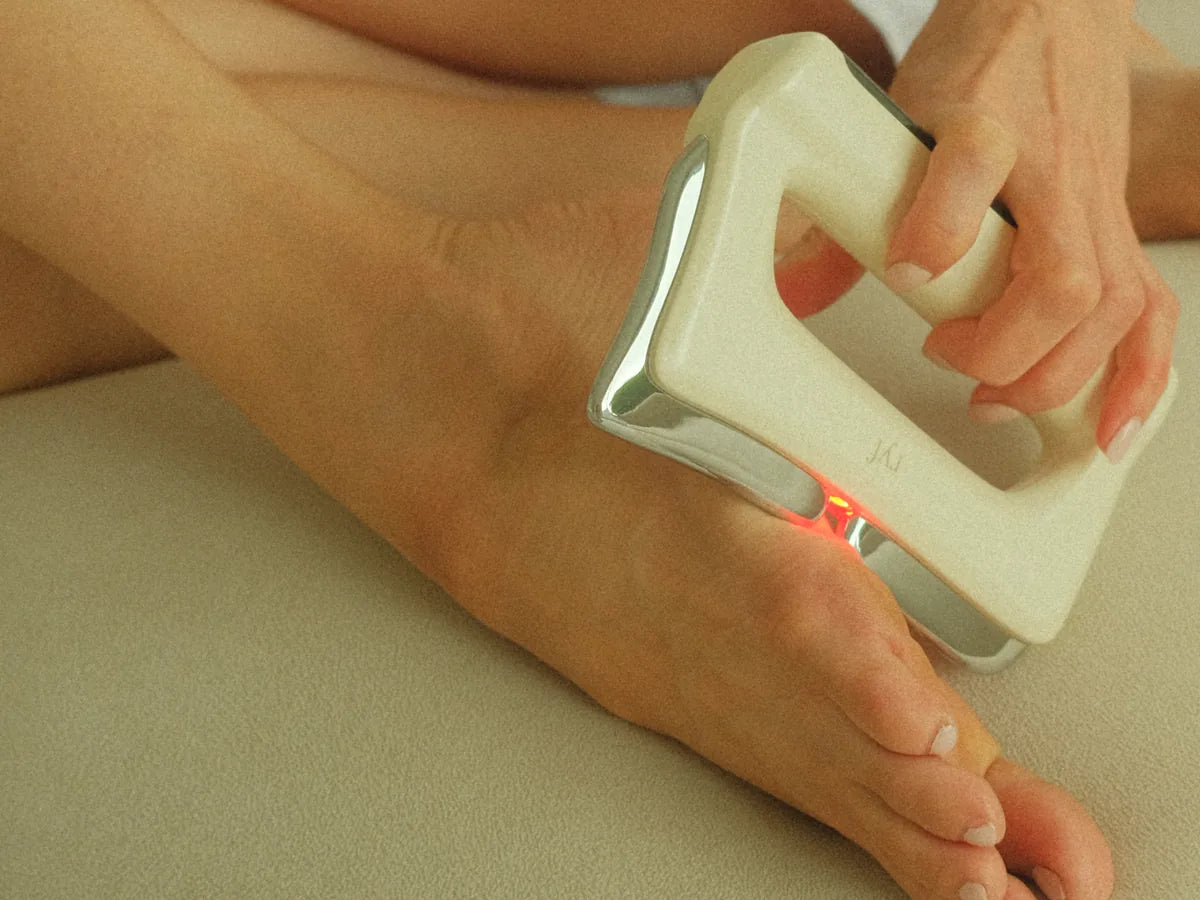
Put it on red and let it warm the area. The warmth softens the fascia so the stuck spot can loosen.
- Find it

Glide slowly. When you hit a spot that's tender, that hurts-so-good kind, stop. That's the adhesion.
- Release it
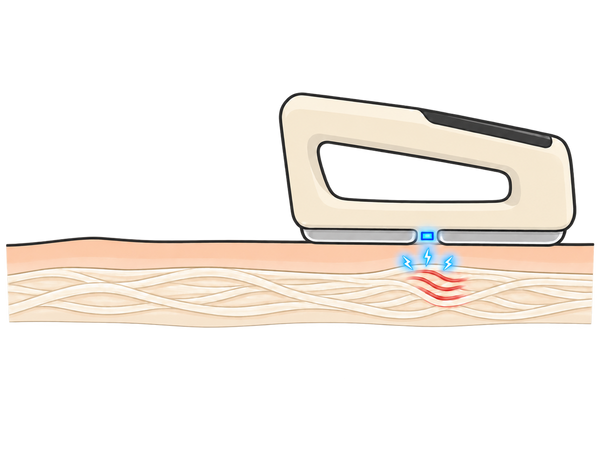
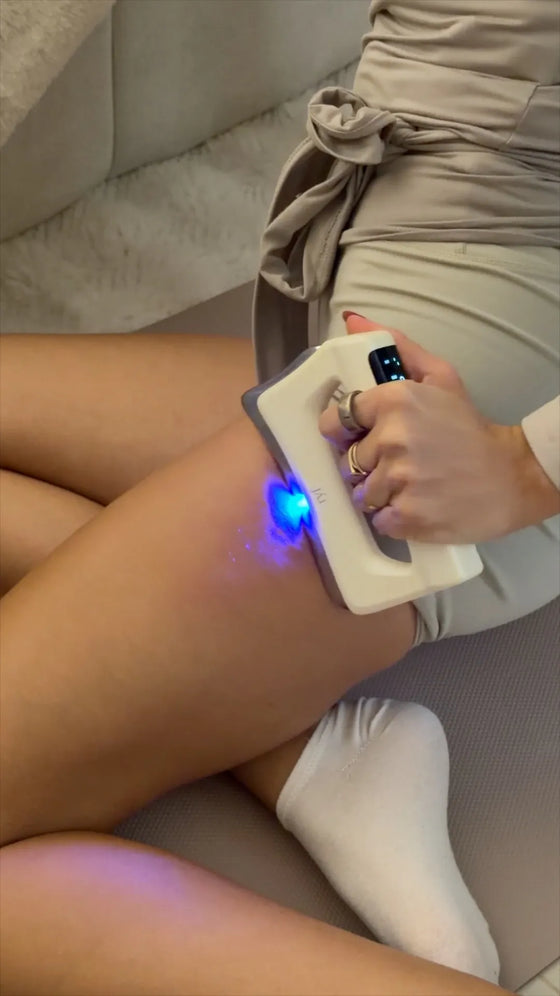
Switch to blue and stay right on it. Let it work until you feel the grip let go.

Now, spot number one

On top of your foot, between the toe bones

Lift your toes. The muscles doing that run along the top of your foot, and a knot in them just tugged the band underneath.
Start between two toes and trace each channel back, slowly. The edge sits right down between the bones, so no knot slips by. Stay on the tender one.
A hurts-so-good ache, then the whole bottom of your foot loosens.

Low on the outside of your calf
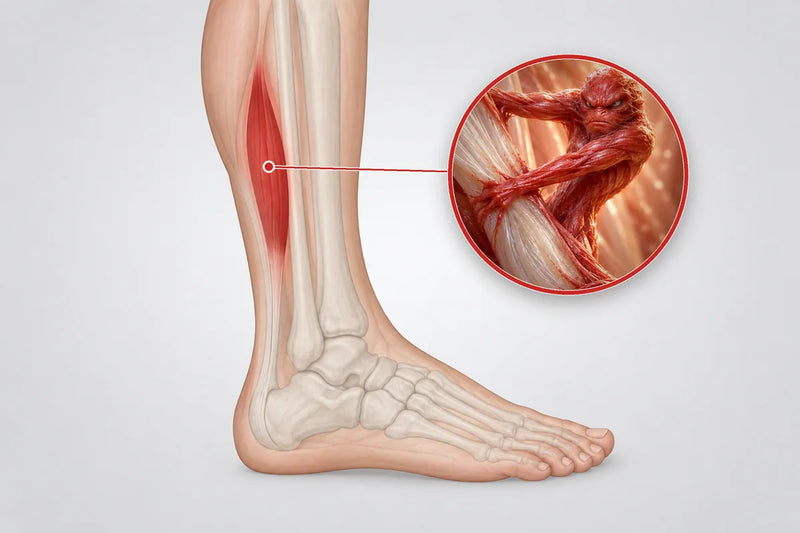
Even now, while you sit, a knot here keeps the band under your heel clamped tight. Every push-off drags it tighter through your Achilles.
Let your calf go slack. On red, glide slowly up the outside until you find the tender spot. Switch to blue and hold right there.
When it softens, stand up. Your heel goes down, and for once you don't flinch.

Where the outside of your thigh meets your hip

Your hip steers how your foot lands. Knotted here, it wrenches your leg tight from hip to heel all night, right up to your first step tomorrow.
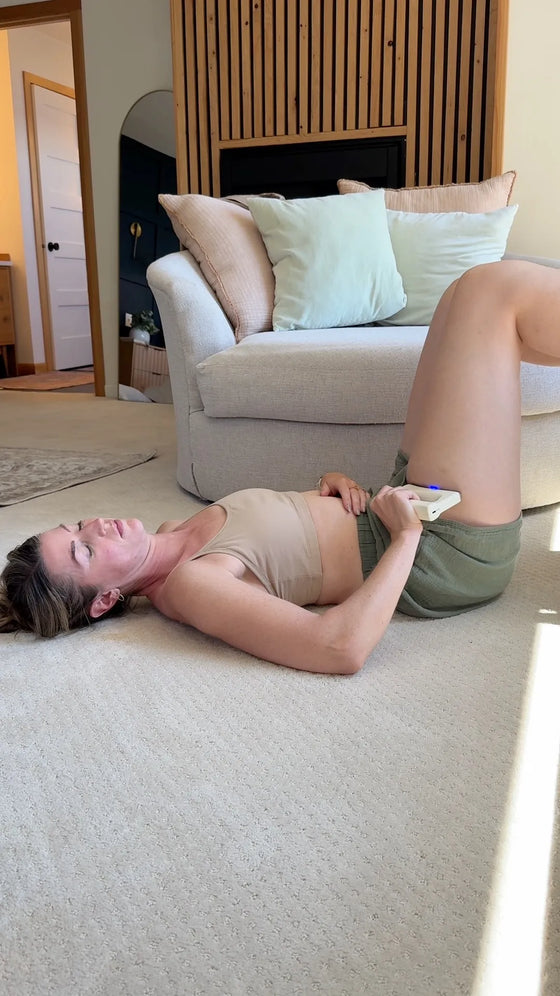
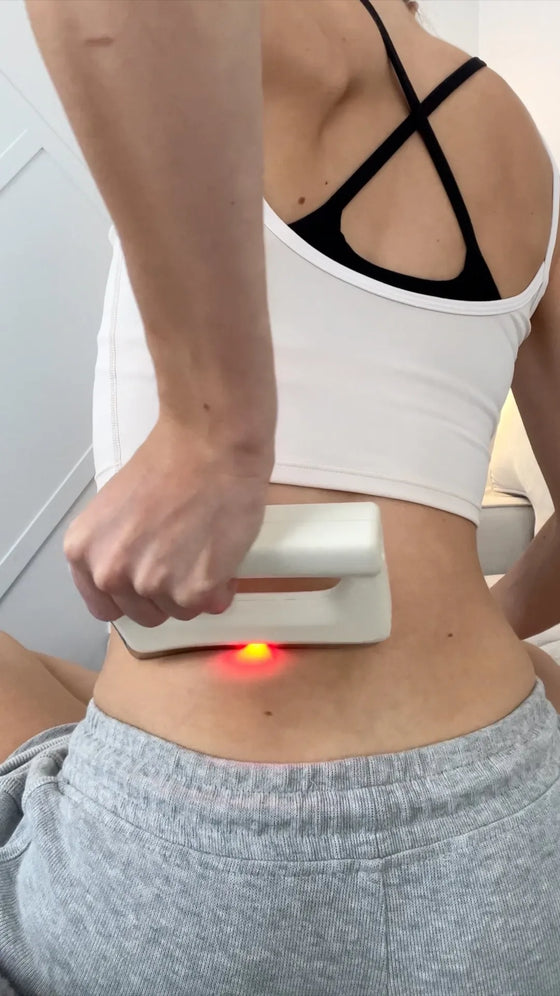
These knots sit deep enough to wear your hands out. Turn the intensity up, hold it on the tender spot and let it work while you relax.
You'll feel it ease all the way down to your heel.
Then, finish where it hurts

Along the arch, from your heel to your toes

Before, anything you did down here came undone overnight, because the adhesions kept yanking the band tight again. With all three released, nothing's pulling on it anymore. Now the work on your sole actually holds.
Start at your heel. On red, glide slowly along the arch toward your toes, always in that one direction. Switch to blue and hold wherever it's tightest.
The whole bottom of your foot softens, and this time it doesn't wind back tight by morning.
i'm on my feet 10 hours a day at the salon. by friday i was limping out to my car. now i do the calf on red while my kids brush their teeth. it's the only thing i've ever stuck with, and my heel isn't the first thing i think about anymore.

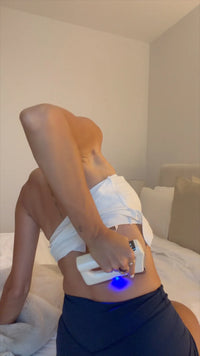
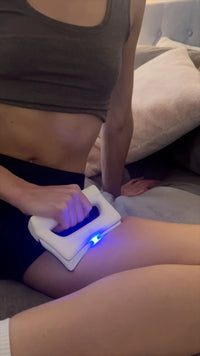

Everything this routine needs, in one device
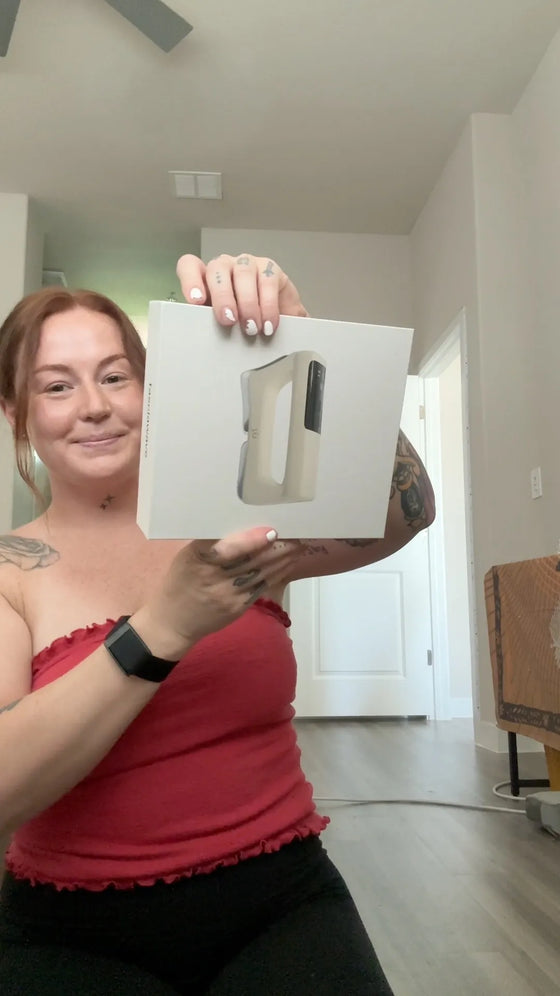
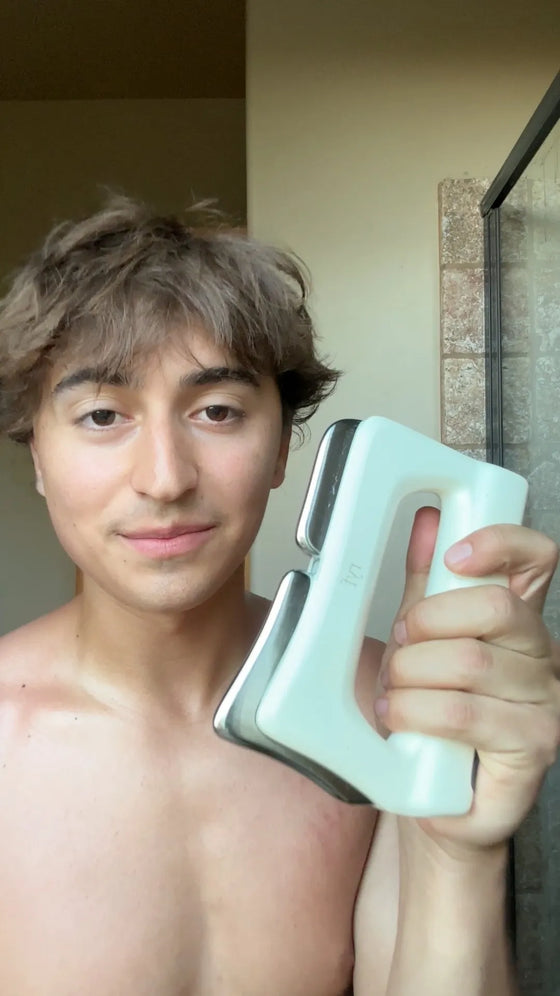
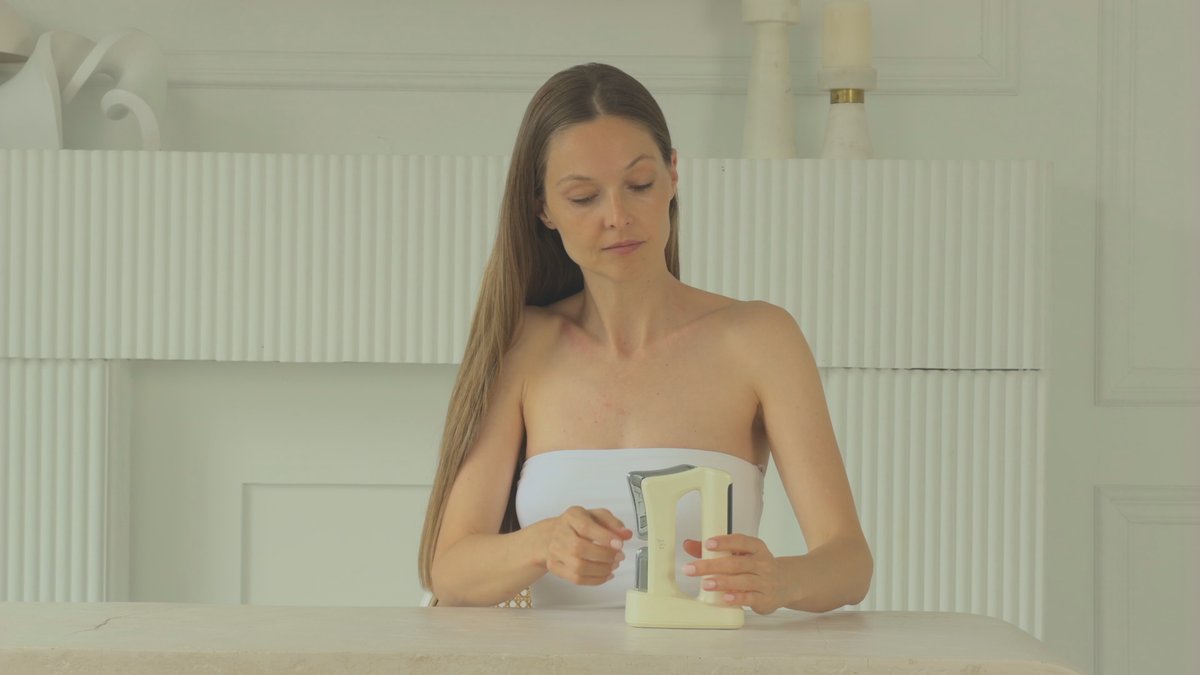
It's called FasciaWave. It's a handheld tool built for fascia.
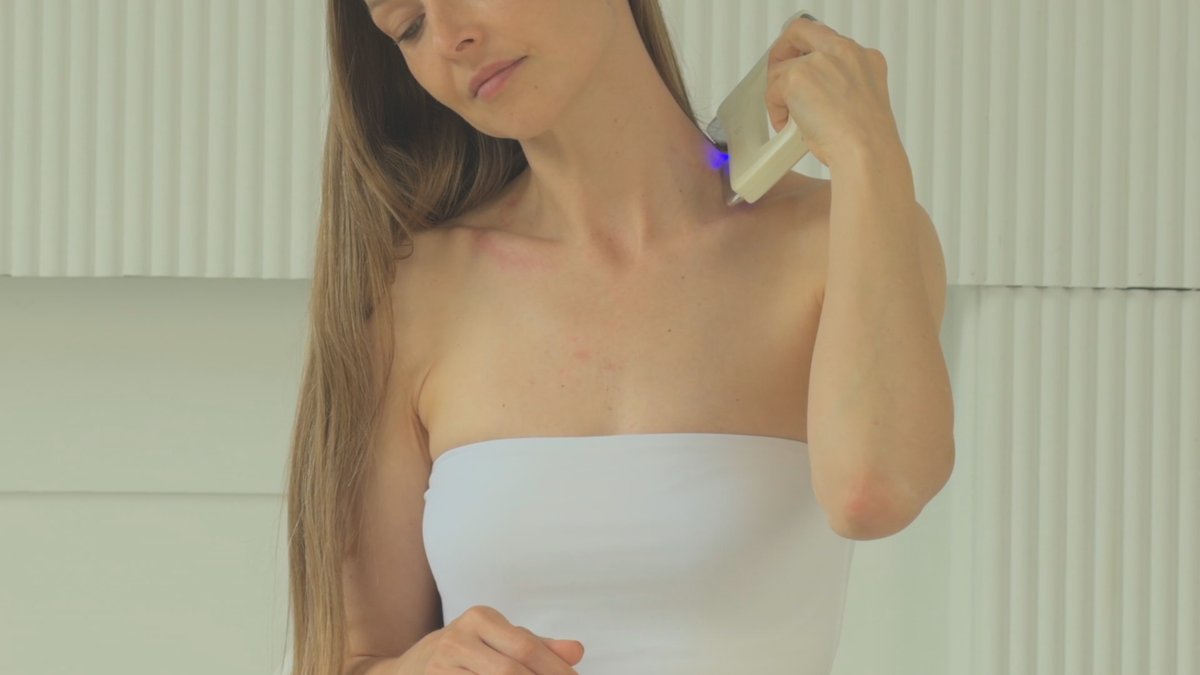
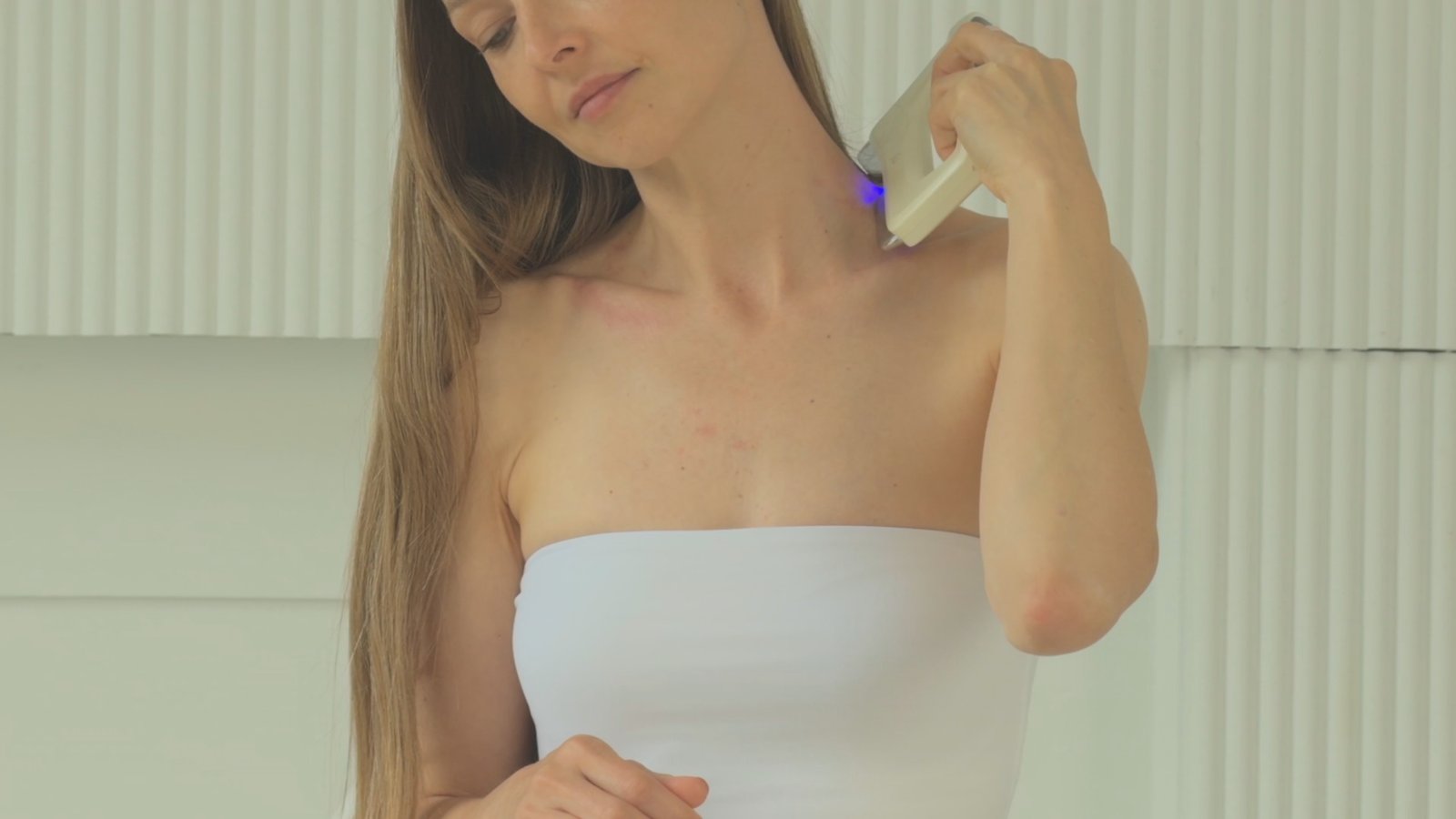
Red brings the warmth. The edge slides down between your toe bones, right onto the spot that bites back. Blue works that knot while you sit back.

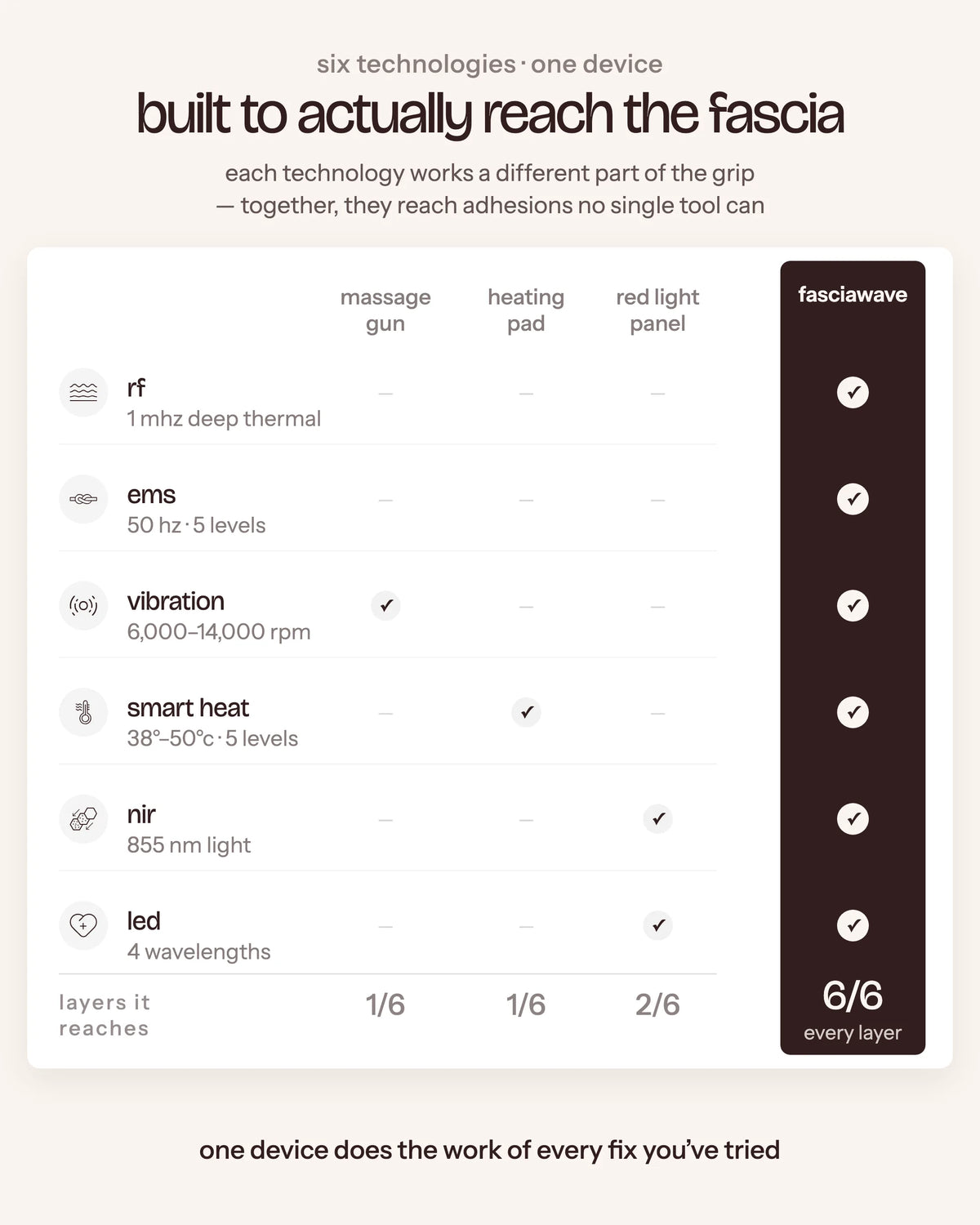
How it works: Hydrate, Release, Restore
- Hydrate

Smart Heat and radio frequency warm below the skin, so stiff fascia softens and the adhesion gives itself away.
- Release
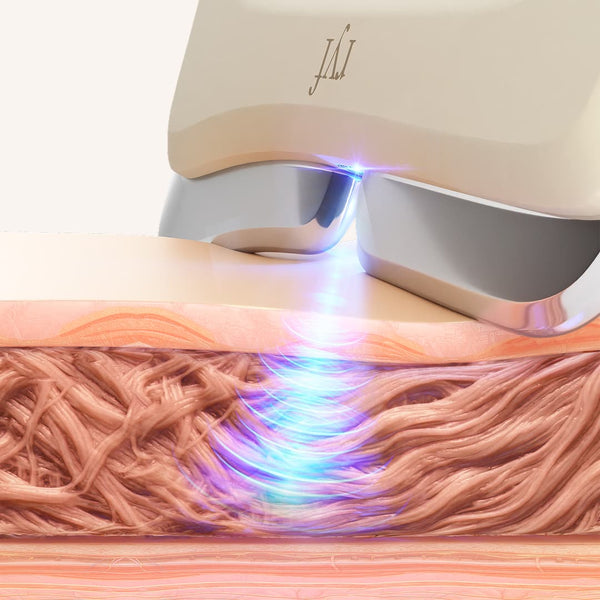
Vibration and EMS, gentle electrical pulses, work into the grip until it lets go.
- Restore
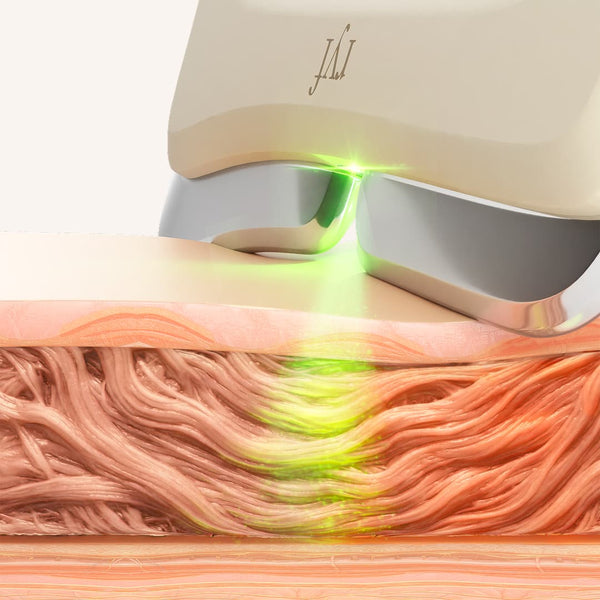
Near-infrared and LED light finish the session. Then you stand up, your heel goes down, and nothing bites.

Tonight, either you release that adhesion, or it spends another night cranking your heel tight.
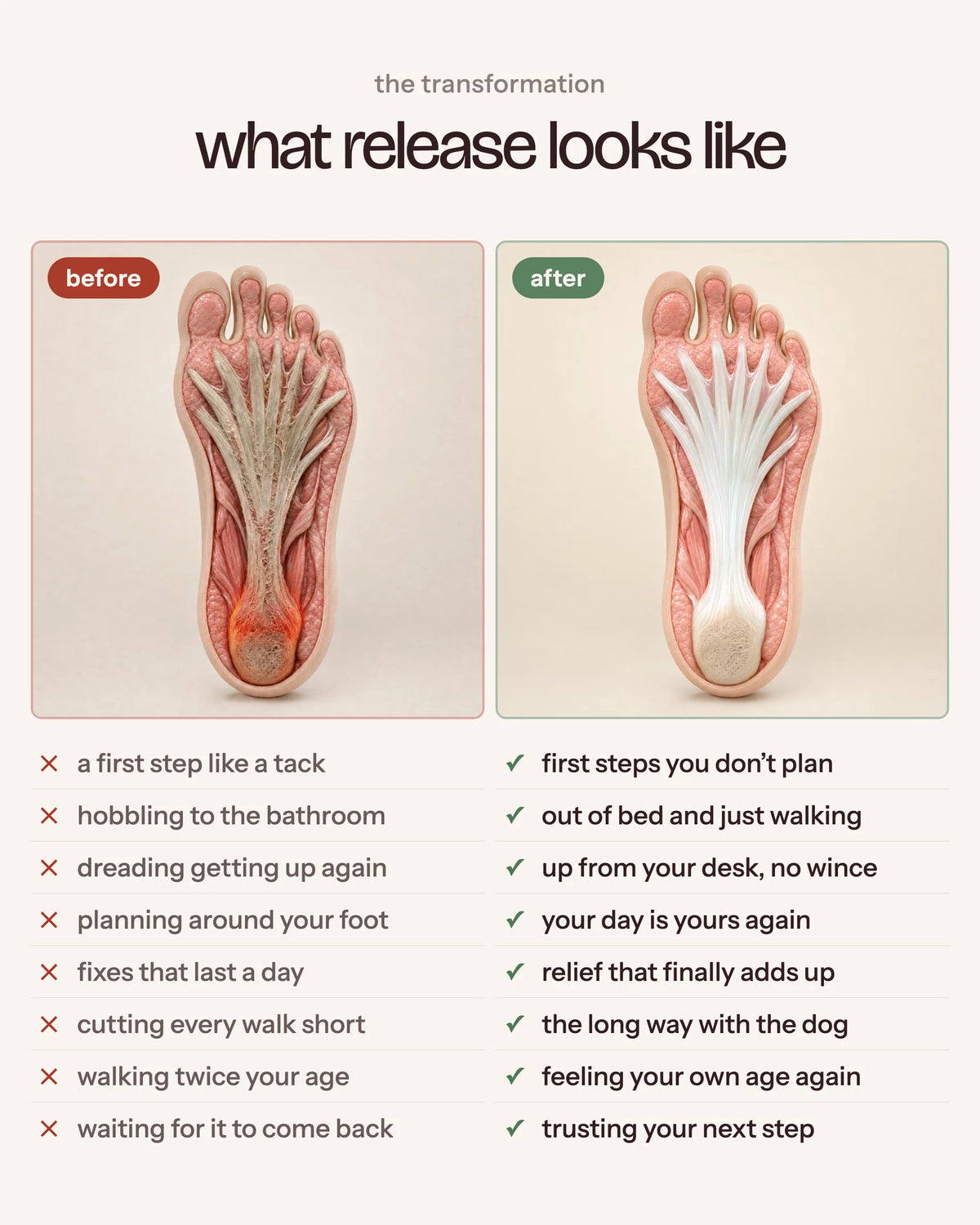
What you get back once that adhesion lets go
Here's what happened when I released mine.
The first morning, I stood up and waited for the nail. It never came.
You'll get that morning too. You'll stand up and walk to the bathroom without reaching for the wall.
Then I walked to the end of our road and back without once thinking about my foot.
You'll take the dog the long way and do every house on the street at Halloween. You'll book the trip you've been dreading, and this time you'll be in the photos.

And I stopped lying awake wondering if I was turning into my mom.
You'll stop feeling twice your age. You'll stop watching people older than you walk right past while you wonder if this is just life now.
The pain lands in your heel. What's yanking on it hides in three spots nobody checks, and it won't let go until you release it.
And right now, while you've been reading, they've been cranking on your heel. Every step you take today gives them another pull. Tomorrow morning, they'll be waiting for you at the edge of the bed.
You don't have to meet them there again.
Get your FasciaWave below, and take back everything your heel has been taking from you.